How Cybersecurity Leaders Are Using Skills Visibility to Turn Workforce Insight into Readiness

The cybersecurity workforce is under pressure. Technologies like AI and cloud are reshaping roles faster than job descriptions can keep up, talent shortages persist, and capable workers remain overlooked due to outdated hiring filters.

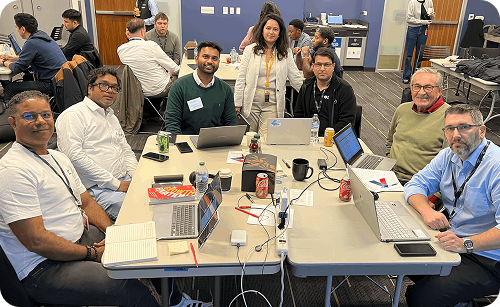
These challenges were central to our recent webinar, Future-Proofing the Workforce: Turning Insight into Readiness, where cybersecurity and workforce leaders examined what’s happening beneath the surface of today’s cyber talent pipeline.

One insight emerged clearly: The issue isn’t a lack of data or a lack of talent — it’s the disconnect between insight and action.

Workforce data shows rapidly shifting skill requirements and declining reliability of traditional credentials as predictors of job readiness. Employers are signaling demand through hiring practices and compensation, yet those signals are often lost when organizations rely on static titles and rigid workforce models.

At the same time, many organizations already have more capability than they realize.

The opportunity lies in skills visibility.

When leaders can see what skills exist across their workforce, where gaps are emerging, and how roles are evolving, workforce planning shifts from reactive hiring to intentional design. Internal mobility increases. Training investments become targeted. Readiness becomes measurable.

Journeys Map supports this shift by translating learning, experience, and work into a shared skills language. The platform helps cybersecurity employers and workforce partners align hiring, development, and planning with the realities of today’s cyber landscape — not outdated assumptions.

If your organization is asking how skills, adaptability, and readiness actually show up in practice, this conversation is just beginning.

A Message from the Journeys Map Team on Collaboration, Workforce Change, and the Year Ahead

As we step into a new year, the Journeys Map team has been reflecting on what shaped 2025 and one truth stands out clearly:

We learned the most from the people we had the privilege to work alongside.

To every client, partner, and collaborator we connected with this past year, thank you. Thank you for trusting us with your questions, your challenges, and your ideas in progress. Your curiosity and willingness to rethink what’s possible continue to shape how this work evolves.

What we’re most grateful for isn’t just the outcomes — it’s the process. The honest conversations. The moments of uncertainty that led to clearer direction. The shared commitment to building pathways that are more human, more equitable, and more aligned with the realities learners and workers are navigating every day.

Each organization and individual we work with brings more than expertise. You bring lived experience, perspective, and purpose. Being invited into that space is something we don’t take lightly.

As we move into the year ahead, our focus remains clear: lead with intention, stay rooted in our “why,” and remain bold enough to evolve how pathways are designed, communicated, and navigated.

Here’s to another year of thoughtful questions, meaningful collaboration, and building what’s needed, not just what’s familiar.— The Journeys Map Team

Skills-Based Hiring Signals a Shift in How Employers Define Talent and Readiness

For decades, résumés and degrees have acted as shorthand for capability. Today, employers across industries are signaling that those proxies are no longer enough.

Hiring leaders are increasingly adopting skills-based hiring, evaluating candidates based on what they can actually do — not just where they’ve worked or which credentials they hold. This shift reflects a deeper change in how organizations define readiness, assess talent, and plan for future workforce needs.

Recent research shows that nearly three-quarters of employers now use skills-based assessments in their hiring process. Employers report that this approach reduces mis-hires, shortens time-to-hire, lowers hiring costs, and improves retention — because testing real skills mirrors real work.

At the same time, degree requirements are quietly disappearing. Employers like Google, Microsoft, IBM, and Apple have removed four-year degree requirements for many roles, prioritizing demonstrated skills, adaptability, and potential over pedigree.

The challenge isn’t employer demand — it’s demand signaling.

Employers know which skills they need. Learners and workers often don’t. Job descriptions still rely on titles, while education systems organize learning around courses, not capabilities. This disconnect leaves skills hidden, talent underutilized, and pathways unclear.

Where Journeys Map fits:

Journeys Map is a skills-based workforce and career navigation platform designed to make skills visible across learning, work, and opportunity. It helps employers, educators, and workforce leaders translate roles into skills, surface existing capability, and align training pathways with real job requirements.

Skills-based hiring isn’t just changing how people get jobs — it’s changing how organizations define potential. The question is whether our systems are ready to respond.

Request a demo or connect with us to see how Journeys Map supports skills-first hiring, training, and workforce readiness.

How Journeys Map Is Mapping Talent Pathways and Closing the Skills Gap

In an era defined by rapid technological change, fragmented career paths and talent shortages are the new normal. Journeys Map, a platform that aims to bring clarity to career progression while aligning educational institutions, employers, and individuals. Much like how major firms are tackling workforce shortages in traditional trades, Journeys Map is stepping into a critical void: connecting skills, jobs, and pathways in the digital age.

The Challenge: Skill Gaps, Talent Shortages & Misaligned Pathways

Across industries, employers are diagnosing a familiar friction, the talent pipeline is clogged, but the issue isn’t simply “not enough people,” it’s “not enough people whose skills and credentials match the jobs.” According to industry research, journey-mapping tools are increasingly central to diagnosing those mismatches.

For students and job-seekers, the problem looks different but parallel; bewildering options, unclear credentials, and no clear map from where they are now to where they could be. Journeys Map positions itself at this intersection.

What Journeys Map Does

Based in San Diego and built by EdGate, Journeys Map is described as a “go-to” resource for career navigation, analyzing skill gaps, upskilling employees, and attracting highly qualified talent.

Key Features:

  • Tailored career-pathway maps for individuals (students, job-seekers) and organizations (employers, education providers).
  • “Skills matcher” tools that let a user input their current skills and see aligned career options.
  • Industry-specific pathways from cybersecurity to healthcarce and advanced manufacturing built with data and partner networks.

In short, Journeys Map brings the mechanics of journey-mapping into the talent ecosystem: what are the touch-points, what are the actions and emotions, where are the barriers?

Why It Matters

From the employer side, having a tool like Journeys Map helps flatten the “black box” of how to hire, train, and retain people in roles that are evolving fast. From the individual side, it offers a visible “route map” rather than the usual maze of options.

Journeys Map helps align educational credentials and real-world job roles, avoiding the perennial problem of credentials on paper that don’t translate to employment. It offers a data-driven approach to pathway creation, mapping not just the job title but also the skills that lead to it, the credentials that matter, and how to move up or across. In today’s economy, with multiple entry points, hybrid careers, and evolving roles, having structured “journeys” is a competitive advantage for regions, employers, and individuals.

What’s Next & The Opportunity

The market for tools that map talent to jobs is burgeoning. With employers facing both legacy skills gaps and the pressure of digital transformation, platforms like Journeys Map sit at the convergence of workforce development, technology, and education.

For regions and industries that adopt it early, Journeys Map offers the chance to build a differentiator: a visible, data-driven pathway system that attracts talent, retains it, and builds upward mobility. Similarly, for learners, it offers agency, knowing their next step, rather than waiting or wandering.

Of course, the platform still must scale, integrate with real-time labor market data, and prove outcomes. Much like workforce initiatives of old, the roadmap is only as good as the execution and fidelity of the pathways.

In a world where “career” no longer means “go to school, get a job, stay 40 years,” Journeys Map offers something valuable, a modern map for modern careers. For regions, institutions, employers, and individuals willing to go beyond analog pathways and disconnected job boards, this tool may well mark the next frontier of workforce alignment.

Journeys Map at the AWS & Deloitte Social Entrepreneur Accelerator

Journeys Map was honored to be included in the AWS and Deloitte Social Entrepreneur Accelerator, held November 4 through 6 in Seattle. The three-day event brought together about fifty mission-driven organizations from around the world, each using technology and data to create meaningful social impact. Representing Journeys Map were CEO Peter Sibley and Director of Technology Jeremy Ashcraft, who spent the week immersed in conversations about how career exploration, skills intelligence, and workforce readiness can be strengthened through thoughtful use of cloud and AI tools.

The accelerator is designed to give social enterprises focused time with AWS and Deloitte experts who understand how mission-driven technology can scale. Throughout the program, Peter and Jeremy explored how to build responsibly, how to integrate AI in ways that support real outcomes for learners, and how to create a clearer roadmap for measuring long-term impact. Sessions on responsible AI, data strategy, and the working backwards framework helped them sharpen the goals that will guide Journeys Map through its next phase of growth.

The timing of this experience fit well with the work already underway at Journeys Map. With the team expanding its skills intelligence capabilities, having AWS technical specialists review the platform’s architecture opened new avenues for innovation and scalability. Deloitte’s guidance helped refine how the company communicates its value to partners and how it can continue to grow while keeping learners at the center of every decision. By the end of the accelerator, Peter and Jeremy left with a more focused plan for the next six to twelve months and a renewed sense of direction.

They also had the chance to meet founders and teams from across the world who are tackling challenges in education, health, climate, accessibility, and more. Even though every organization carried a different mission, the shared motivation to build solutions that genuinely help people created an immediate sense of connection. Those conversations added depth and perspective to the week and reinforced the importance of collaboration in social innovation.

As the broader team moves forward, the insights Peter and Jeremy brought home are already shaping the next steps. Journeys Map is strengthening its platform, refining its impact measures, and developing features that make career exploration more accessible and actionable for learners everywhere. If you are interested in how this work is evolving or want to explore what Journeys Map can bring to your organization, we would be glad to connect and share more.

Journeys Map is grateful to AWS and Deloitte for creating a space where purpose-driven companies can learn, reflect, and walk away with something truly actionable. Being part of the accelerator was an important milestone, and the team is excited to build on the momentum it created.

Why “Future-Proofing the Workforce” Matters for San Diego Cyber Leaders

Cybersecurity is no longer just a technical challenge — it’s a workforce strategy issue. In San Diego alone, our cybersecurity cluster delivers significant economic impact, with more than 14,800 direct cyber jobs and a regional footprint valued at $4.3 billion. As our technology landscape evolves rapidly, the organizations that thrive will be those that not only understand this scale — but actively prepare for what comes next.

That’s why Journeys Map and FourOne Insights are hosting a live webinar on Friday, November 21 at 10:00 AM PT, titled Future-Proofing the Workforce: Turning Insight into Readiness. This isn’t a talk about AI for AI’s sake — it’s a practical, forward-looking discussion tailored for San Diego’s cybersecurity employers and workforce leaders.

What You’ll Learn

  • How visibility unlocks readiness. We’ll show how understanding your team’s current skills helps you anticipate emerging cyber roles — before gaps become vulnerabilities.
  • How to connect insight with strategy. Learn how to align workforce planning and talent investments to drive resilience and agility in your organization.
  • How to build future-ready teams. We’ll offer concrete recommendations for building adaptability into your workforce so that you can respond confidently to disruption.

Why It Matters Now

The latest report from the San Diego Cyber Center of Excellence (CCOE) and the Regional EDC makes it clear: our region is a cyber powerhouse. But with such growth comes the responsibility to prepare. Skills gaps — especially as technology shifts — can undermine the strength of even the most capable teams. This webinar is about turning visibility into action, so you stay ahead of change, not just react to it.

Register Today

🗓 When: Friday, November 21
Time: 10:00 AM PT
🔗 Register Now

By attending, you’ll walk away not just with insight — but with a clearer direction for action. We hope you’ll join us as we work together to build a more visible, resilient, and future-ready cybersecurity workforce in San Diego.

Can’t attend the live event? Register anyway and we will send you are recording along with other material presented during the event.

Journeys Map: A Catalyst for Change in Cybersecurity

Did you know that only 24% of the cybersecurity workforce is female? This statistic highlights a significant gender gap in the industry. At Journeys Map, we’re committed to closing this gap and empowering women to pursue successful careers in cybersecurity.

Women in Cybersecurity (WiCyS) Event

Recently, I had the privilege of attending the Women in Cybersecurity (WiCyS) San Diego Speakers Series. This event was a powerful reminder of the importance of supporting women in tech and creating a more inclusive environment. The panelists offered invaluable insights into how organizations can foster diversity and inclusion in their cybersecurity teams.

Key Takeaways

  • Hire more women at all levels: Organizations need to actively seek out and hire women in cybersecurity roles, from entry-level positions to leadership roles.
  • Include diverse voices and perspectives: Creating a diverse team can lead to better problem-solving, innovation, and overall success.
  • Sponsor programs for women’s career growth: Offering mentorship programs, training opportunities, and networking events can help women advance their careers.
  • Partner with organizations like WiCyS: Collaborating with organizations dedicated to empowering women in cybersecurity can make a significant impact.

How Journeys Map Can Help

Journeys Map is a comprehensive career navigation tool that can help organizations develop and sustain cybersecurity employer engagement and talent pipeline management.

Here’s how we can support your efforts:

  • Identify and attract top female talent: Our platform can help you find qualified women candidates within and outside your organization ready to fulfill your cybersecurity needs.
  • Provide targeted career development resources: We offer a variety of resources, including assessments, access to skill-building opportunities, and technical training to support women’s career growth in cybersecurity.
  • Measure and track individual career goals and professional growth: Our analytics tools can help you monitor the progress of your employees as they develop their skills, explore career paths, and achieve their professional goals.
  • Support business growth: By creating personalized career maps for your employees, you can identify skills gaps within your organization and access qualified individuals to fill those roles. This helps you build a high-performing team and achieve your business objectives.

The involvement of women in cybersecurity is not just a matter of filling seats; it’s about leveraging women’s distinctive skills, perspectives, and values to enhance the field. Their participation is key to driving innovation, ensuring balanced decision-making, and building a resilient digital defense against cyber threats. By fostering a diverse and inclusive cybersecurity workforce, we can create a stronger, more effective, and more secure digital world.

By working together, we can create a more inclusive and equitable cybersecurity industry. Journeys Map is committed to empowering women and supporting organizations in their efforts to close the gender gap.

Contact our team to learn more about how Journeys Map can help your organization.

Smooth Transitions for Military Families

Military service members and their families face unique challenges during the transition to civilian life. At Journeys Map, we appreciate these challenges and are here to help. We support National University, a Veteran-founded nonprofit that’s been a guiding light for military-affiliated students since 1971. National University’s commitment to support for non-traditional students has earned them Gold status as a Military Friendly School and also a Top 10 Military Friendly Spouse School for 2024.

Turning Military Skills Into Civilian Success

One of the biggest challenges for service members is figuring out how their military skills translate to civilian careers. Journeys Map not only helps veterans see exactly how their military experience can open doors to new opportunities in the civilian world, but with powerful tools like our Skills Matcher, they can align and translate their military skills to exciting new  careers. Additionally, our Interest Survey guides career seekers through a variety of exercises and experiences, helping them discover the career paths that best fit their interests and strengths. It’s more than just a job search; it’s about envisioning the entire path to make the transition smoother.

Helping Military Spouses and Their Children Thrive

Military life can be tough on families, especially when it comes to frequent moves. Journeys Map is designed to help both spouses and their children overcome these challenges. Our platform offers flexible, location-independent career options, so spouses can continue to thrive professionally no matter where they go. For military children, Journeys Map highlights essential resources to help them stay on track with their education. We’re always up to date with state career and education standards for every grade level and provide targeted resources for each required benchmark, helping students build confidence in their subject matter.

Guiding Students Toward Success

At Journeys Map, student success is at the heart of what we do. We understand that frequent relocations and school changes can disrupt a child’s educational journey leading to gaps in learning and a loss of confidence. That’s why we’ve designed our tools to help students not only catch up, but to excel. By providing resources that align with state standards and offering guidance tailored to each student’s unique needs, Journeys Map ensures that every child can achieve their academic goals, no matter where life takes them.

A Shared Commitment to Your Success

At Journeys Map, we’re proud to support the goals of National University in serving the military community. Together, we are committed to providing the resources that empower service members and their families. Whether it’s helping veterans transition into civilian careers or supporting military families through educational and professional disruptions, we’re here to make a positive impact on the lives of those who have served our country.

We are dedicated to making the journey from military to civilian life as smooth and successful as possible so military families can confidently take the next step in their professional and educational journeys.

Ready to take the next step in your journey? Sign up for a free trial and explore Journeys Map today to unlock your future!

AI Generated Pathways: Real or Fiction

There is a rash of AI generated career finding tools on the market today. The questions on my mind are — are they any good? Can AI really help me find my path to a successful career quicker, or at least with less indecision? And can AI replace the individuals who have dedicated their lives to helping others find fulfilling careers? 

Let me begin by stating that it’s been my feeling for some time that the process of career or pathway development is extremely flawed. Back when I knew little about the career-finding space (2014) I founded a company called CareerPath to help students and dislocated workers find their path to success. I was as one might say, green, and perhaps overly optimistic about what we could achieve and what the landscape looked like at that time. What we did do well was engage students via our mobile application, and proved through numerous case studies that by connecting with them on their devices first (low friction/high yield) they were more likely to participate during in-person events at the career centers we worked with.

A Logical Evolution

Career exploration has always been part science, part interpersonal connectedness. What I mean by this is there are plenty of structural pathways and tools created that will get a person part or most of the way to understanding the possibilities, but there most often is another human helping guide the way, be it advisor, mentor, counselor, teacher, parent, coach, or friend. As humans, we respond to other humans, it’s part of our DNA. The problem is twofold. First, many are not trained to advise others on career planning and pathways, and second, quite often the professionals who are trained (advisors, guidance counselors, etc.) are overloaded with so many students, they are often overwhelmed and cannot provide the level of service they would like to. 

The rise of new AI driven career pathways technology makes perfect sense, but like with any gold-rush, in the haste to reap rewards, it seems many new solution providers are slapping some lipstick on the pig and proclaiming victory. AI is indeed powerful, and will benefit the process in myriad ways. With Journeys Map, we have been utilizing Machine Learning and AI for a number of years now to improve the alignment process of skills to CTE standards. This discrete application is yielding significant benefit, as the speed in which we are able to create pathways to any career opportunity has increased significantly.

Outcomes Matter

Before taking the leap with a new piece of AI driven software, ask yourself a few questions. Does the solution solely rely on AI to produce results? Has the company been in business long enough to really understand the career services space? Does the technology enable the people doing the work, or attempt to replace them? Is the app relying on existing paradigms, like personal interest assessments, to produce ‘fast’ pathway options? All of these situations may have some merit, but applied in a vacuum may simply pander to peoples curiosities rather than truly solve a problem. 

Ultimately aiding people, young or old, in finding a career path means understanding what they have interest and aptitude in, applying their skill set and seeing how it matches up to the careers of interest, and learning enough about their past activities to assemble suggestions of meaning. AI has its place, but so do the individuals who have made it their career mission to help others in need. Perhaps the most important question to ask is, can technology truly replace empathetic human interactions? 

Advocating for Early Career Exploration

Have you ever stopped to think about how exploring career paths shaped your journey? During our middle school years, we are taught the importance of planning and goal setting, when our young minds are open to the endless possibilities and eager to explore the world we live in.

At this age, students should be encouraged to explore their career options to foster their curiosity, self-awareness, and interests. By encouraging young individuals to explore different career paths, we can empower them to make informed choices about their future and establish realistic goals.

According to a study conducted by the American Student Assistance® (ASA) and Education Strategy Group (ESG), a student’s academic performance, motivation, and overall job satisfaction can be greatly impacted by early exposure to a variety of occupations. By introducing students to a wide range of career options, we can help them discover their passions, strengths, and interests, setting them on a path towards success and fulfillment.

Guided Pathways Start Here

This is where Journeys Map can make a difference in guiding students in their career exploration. Journeys offers students a personalized roadmap that navigates them through different career paths based on interests, skills, and values. Journeys Map powerful data analysis capabilities match students with potential career options that align with their unique situation. Through interactive quizzes, resources, and real-world insights, Journeys Map enables students to make informed decisions about their future with confidence. Whether it’s diving into apprenticeships, exploring vocational training, or even dreaming up entrepreneurial ventures, Journeys is like a compass guiding students toward paths that truly speak to them.

In addition to beginning exploring career options earlier, school advisors need ways to connect better with their students. Advisors are reliable and essential guides when it comes to navigating the jungle of career discovery. They can help students confidently explore many career paths by utilizing Journeys as their companion. Journeys offers a vast array of resources so advisors can craft tailored guidance that aligns perfectly with each student’s dreams and abilities.  Using Journeys resources, advisors can help students in their own personal journey, whether it’s discovering a hidden skill or pursuing unusual career paths.

Advisors also face challenges in career guidance with high student-to-advisor ratios and limited time working with individual students. Journeys offers a solution to these challenges by providing advisors with resources to help personalize their support, or even empower the students to navigate on their own.

Cyber Professionals In Demand

One career that’s currently in high demand and sparking interests in middle schoolers is cybersecurity. As technology continues to shape our world, the need for cybersecurity professionals likewise continues to grow. To highlight this growing career path, Journeys partners with educational institutions like the Cyber Center of Excellence (CCOE) to offer virtual career exploration events. These events provide students with insights into the world of cybersecurity to potentially spark their interest in the field.

Many states are now recognizing the importance of earlier career exploration. In Indiana, the Commission for Higher Education has developed a Comprehensive Career Coaching and Navigation Framework that is focused on career exploration, engagement, and experience. Kentucky has also developed statewide efforts to support its advising needs. They offer the Kentucky Advising Academy (KAA) which includes a College and Career Advising Toolkit. This toolkit includes career exploration, financial aid and literacy, and information on postsecondary opportunities.

Middle school is a place where dreams begin to take shape. By emphasizing career exploration during this crucial time, we’re raising the next generation of professionals who are equipped to succeed in a world that is always changing, in addition to getting students ready for the workforce. 

Interested in seeing how Journeys can help your students on their career exploration? Journeys Map is free to try today! Explore the possibilities!